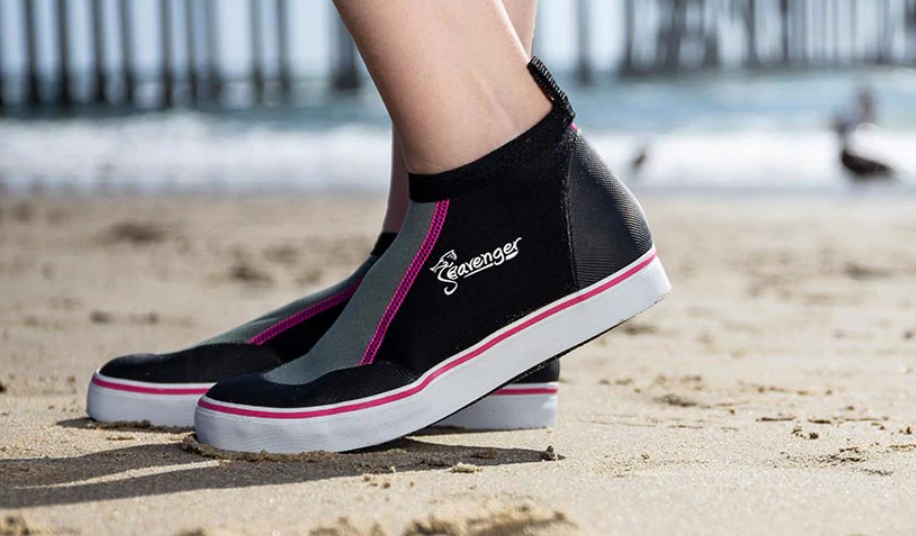
Wetsuit shoes are purpose-built for use in the water. They’re typically made from neoprene or other thermal materials that help keep your feet warm while offering protection from sharp rocks, coral and slippery surfaces. Their main function is to provide insulation and grip during activities like surfing, snorkelling, paddleboarding or kayaking. Unlike general water shoes, wetsuit shoes prioritise warmth and flexibility over long-distance land comfort.
Walking on Land: What You Need to Know
You can walk on land in wetsuit shoes, but they are designed for short, transitional distances rather than extended wear. Their soles are thinner and more flexible than standard footwear, which is great for feeling your board or maintaining agility in the water but not ideal for rough terrain. They work well on sand, boat ramps and soft surfaces, though you may notice wear and tear more quickly on concrete or gravel.
Pros of Wearing Wetsuit Shoes on Land
Wetsuit shoes can be convenient when moving between water and land. They offer reliable foot protection near beaches, rivers or rocky shorelines and eliminate the need to switch footwear during short transitions. Their lightweight construction also makes them quick to slip on and off. For a range of comfortable and flexible options suitable for these situations, explore this selection of wetsuit shoes.
Potential Downsides to Consider
While wetsuit shoes are versatile around the water, they aren’t built for long-lasting durability on hard surfaces. Walking extensively on concrete or rocky paths can wear down the soles faster. They also usually lack arch support, which can lead to discomfort over time. Because they’re made from neoprene, they may feel warm or spongy when used for prolonged land activities.
See also: Why Charlotte Residents Are Switching to Recurring House Cleaning and Pest Control Services
Tips for Using Wetsuit Shoes on Land
Wetsuit shoes are best for short walks such as heading from the carpark to the beach, crossing rocky shorelines or navigating boat ramps. If your outing involves longer walks, consider switching to regular shoes once you’re out of the water. After wearing wetsuit shoes on land, rinse them with fresh water and allow them to dry in the shade to maintain their shape and lifespan.
Alternatives for Land and Water Use
If you need footwear that can comfortably handle both environments, water shoes or hybrid adventure shoes may be a better choice. They usually have sturdier soles and more structural support while still draining water effectively. Wetsuit shoes remain the better option when thermal insulation and flexibility are the priority.
Last Thoughts
You can walk on land in wetsuit shoes, but only for short distances and on softer surfaces. They excel in and around the water, offering warmth and protection where you need it most. For anything beyond a brief transition, switching to more durable land footwear will keep you comfortable and help extend the life of your wetsuit shoes.
FAQs
Can I hike in wetsuit shoes?
Not recommended. They lack the support and durability needed for trails.
Will walking on concrete damage them?
Regular use on hard surfaces will wear the soles down quickly.
Do wetsuit shoes have enough grip on wet rocks?
Yes, most provide excellent traction for shoreline and water entry.